Needlework Picture
Attributed to Faith Trumbull (1743-1775)
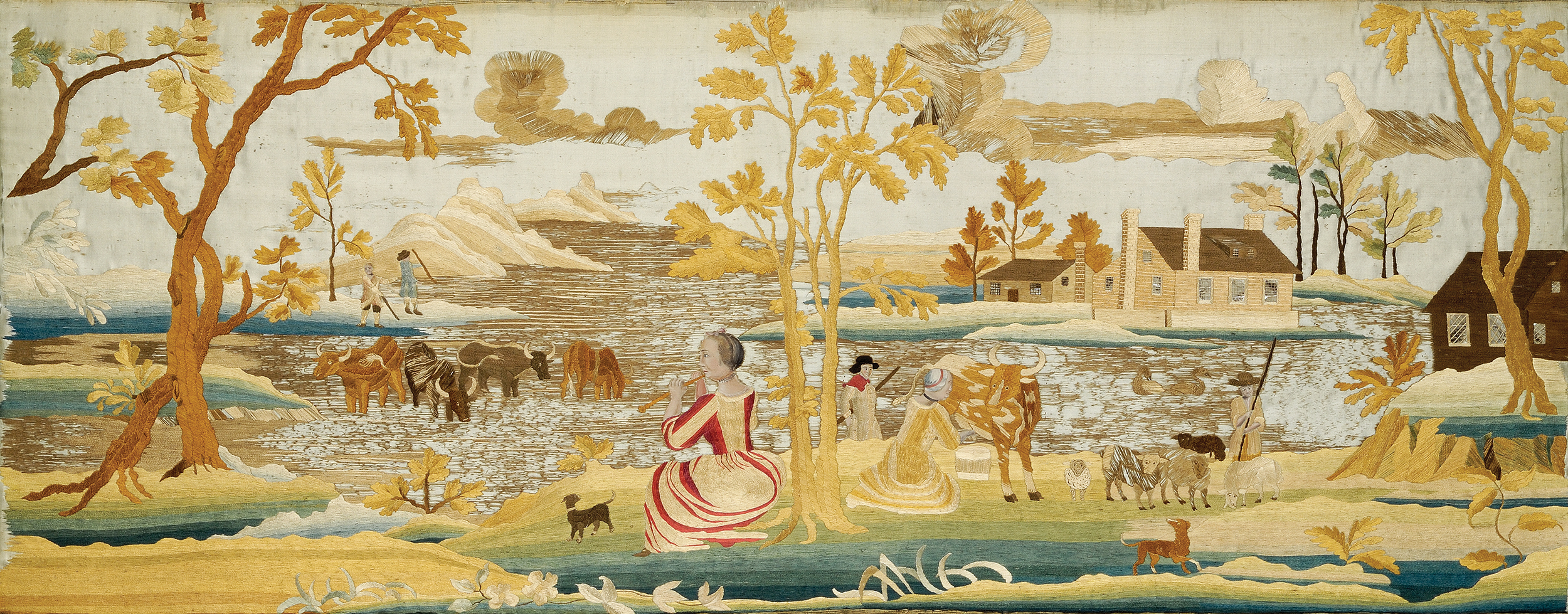
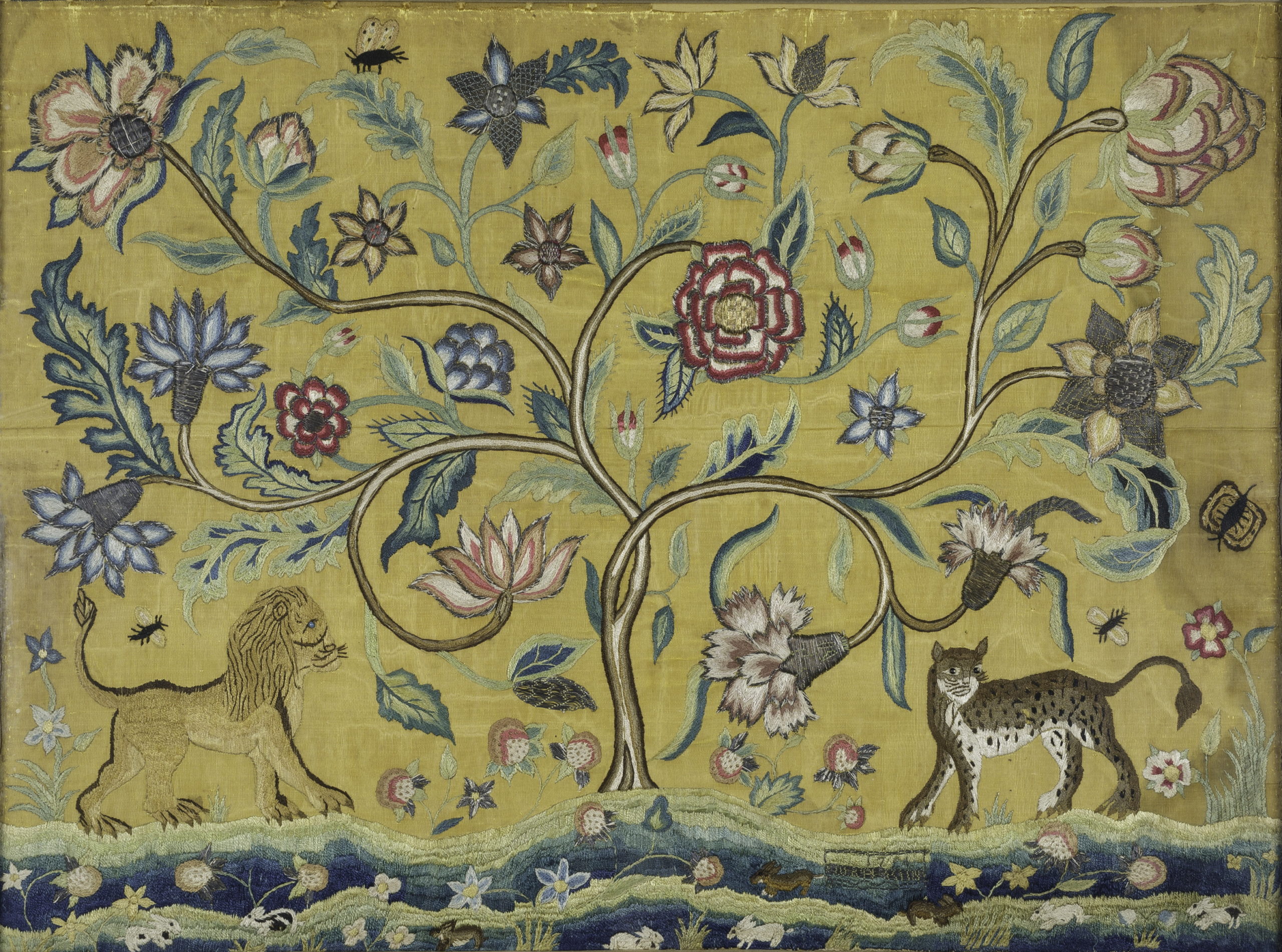
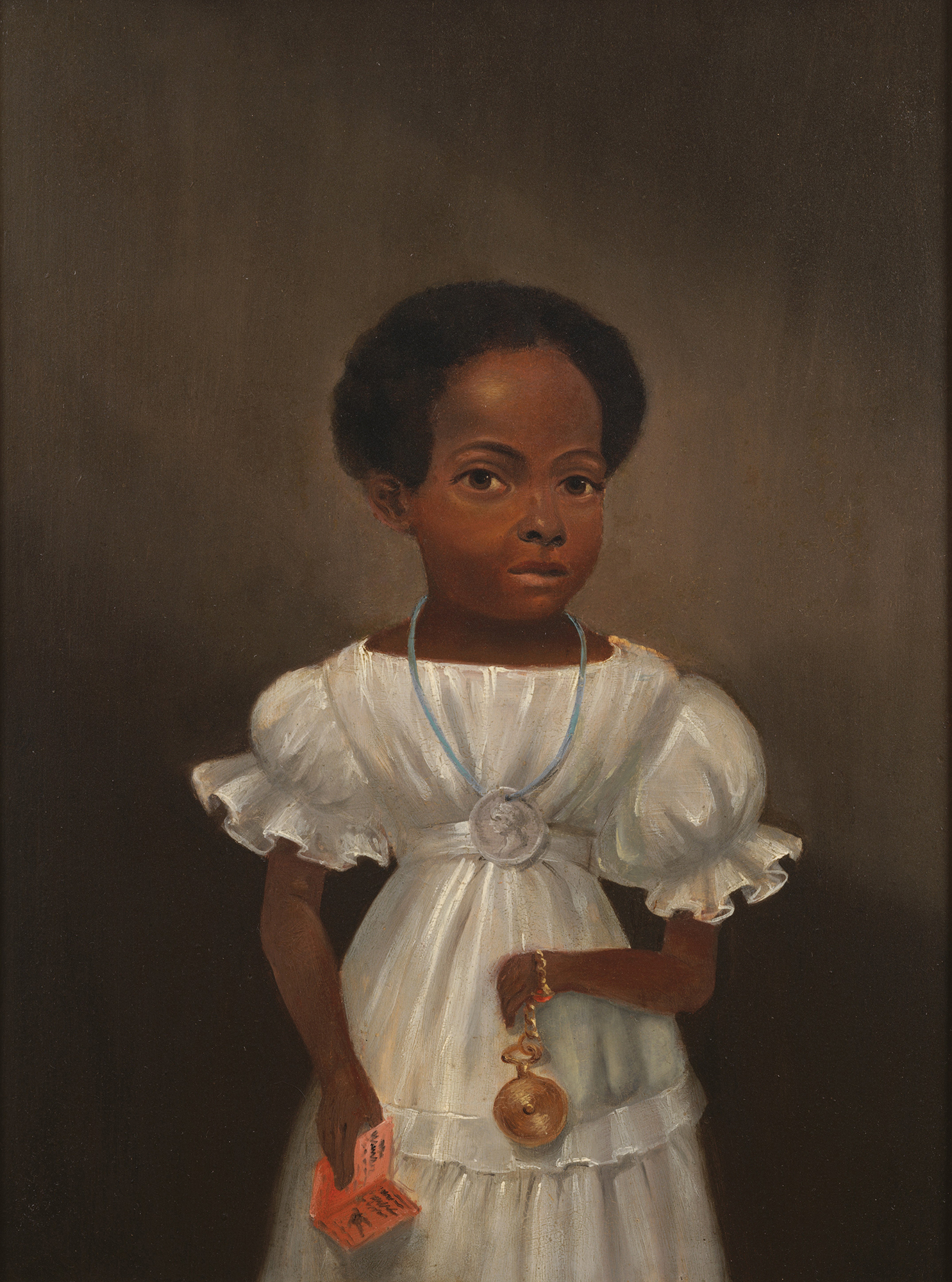
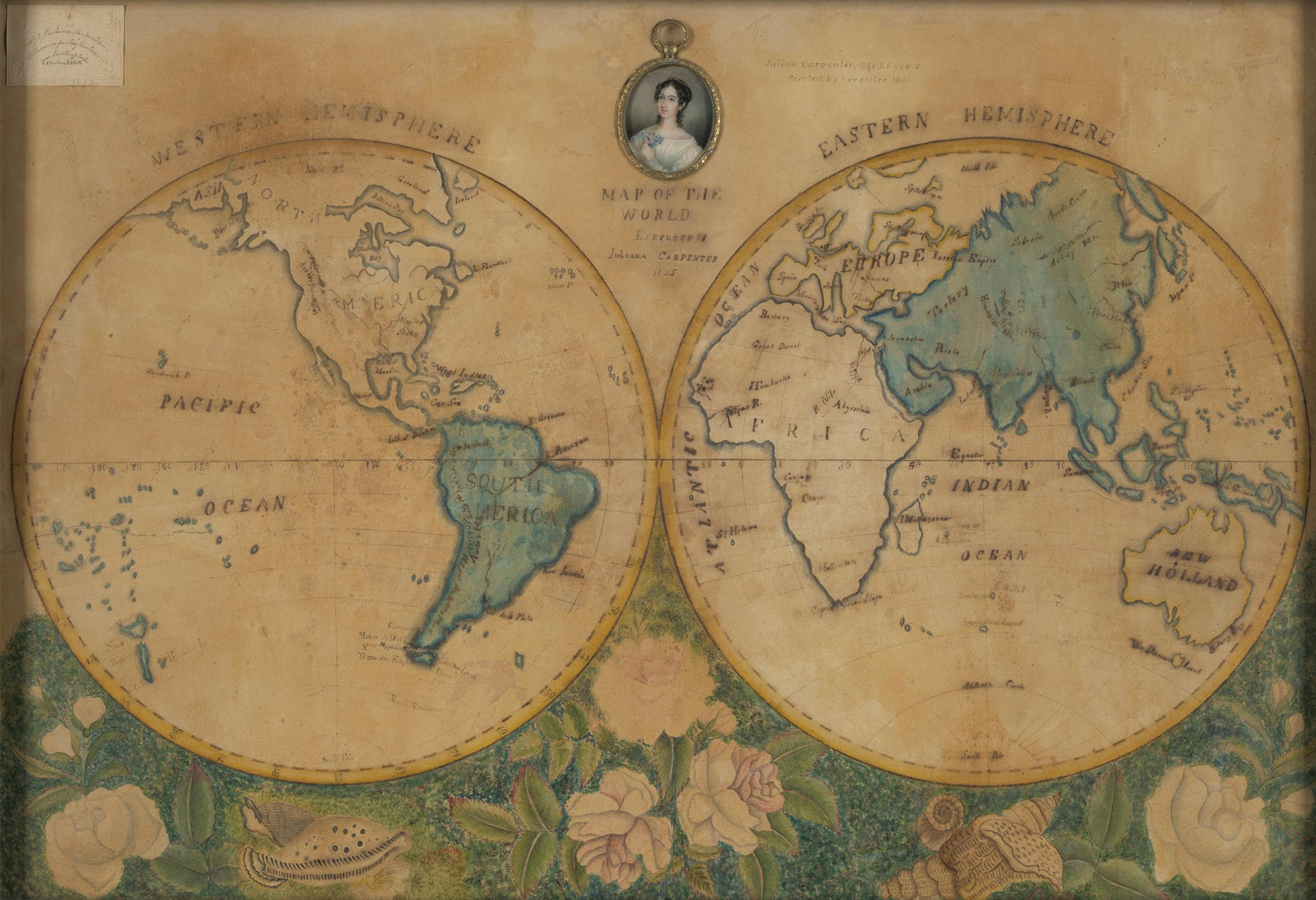
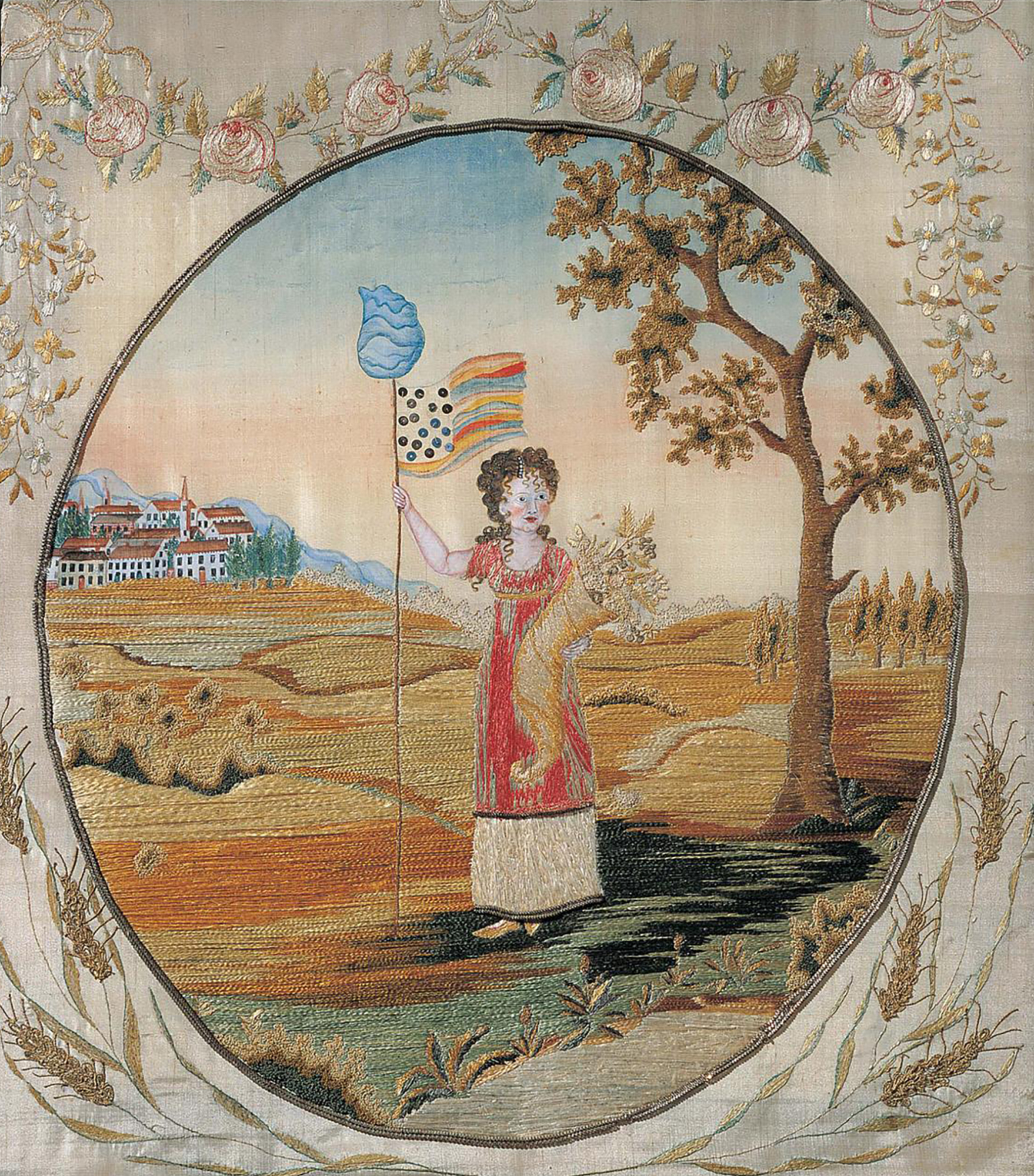
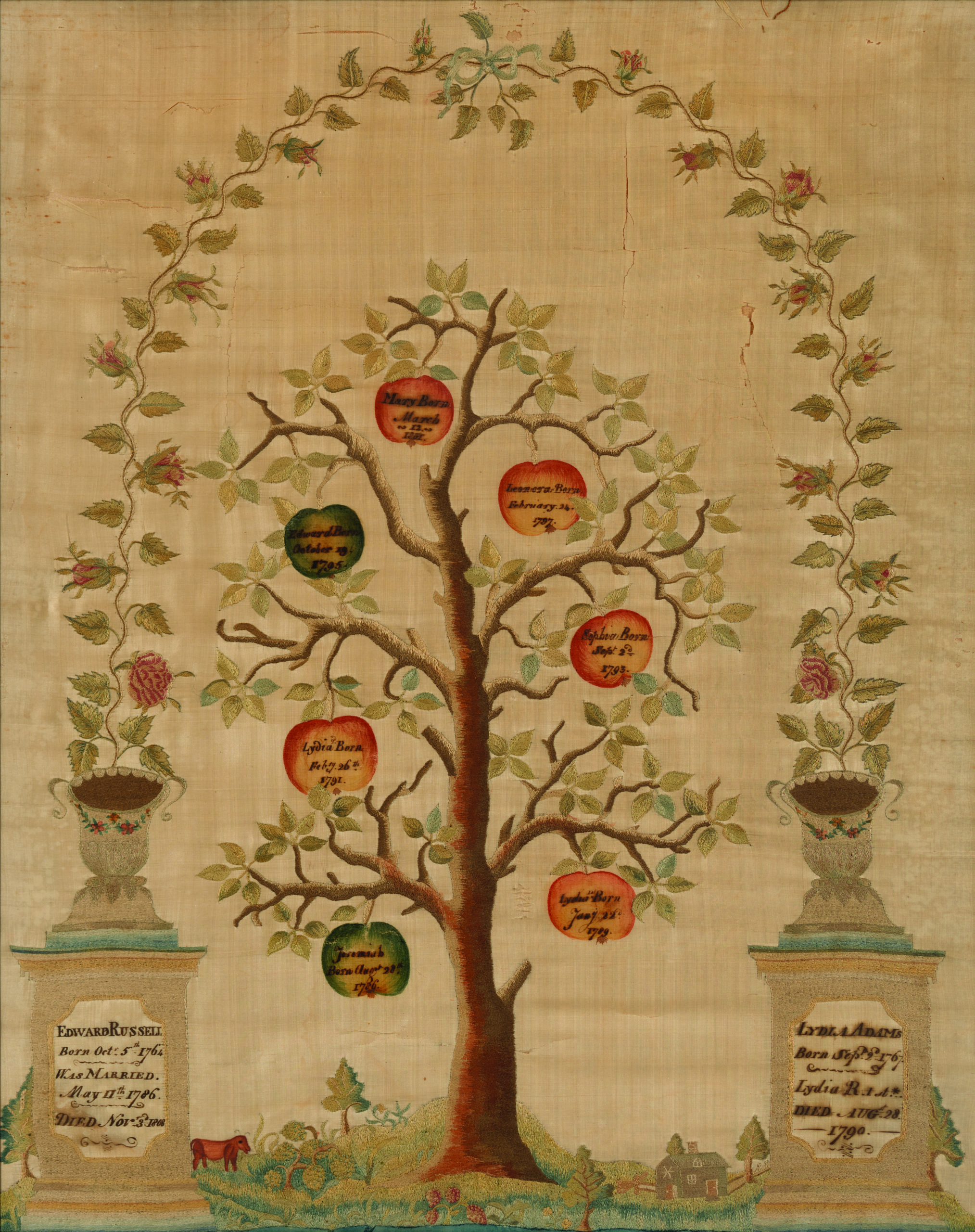
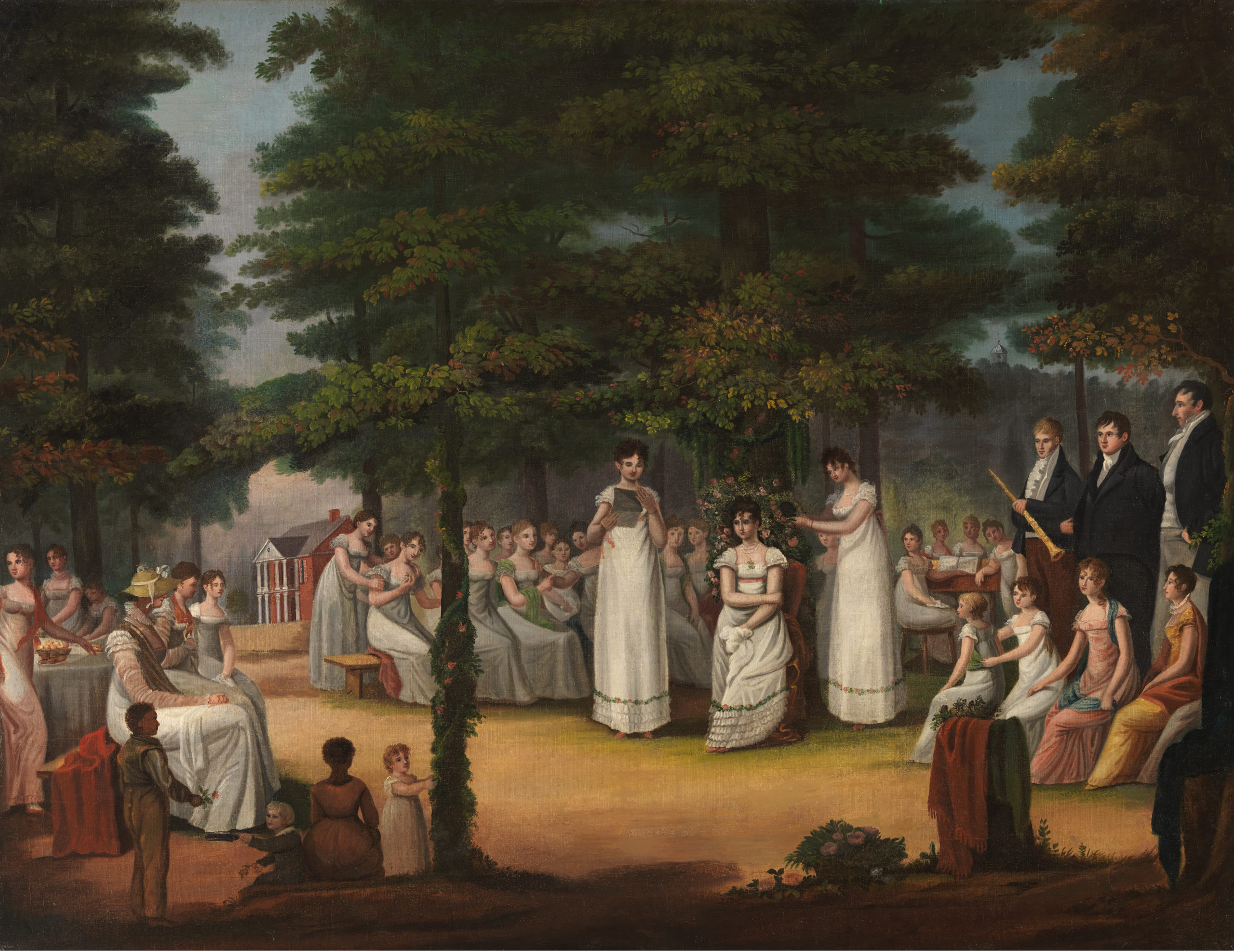
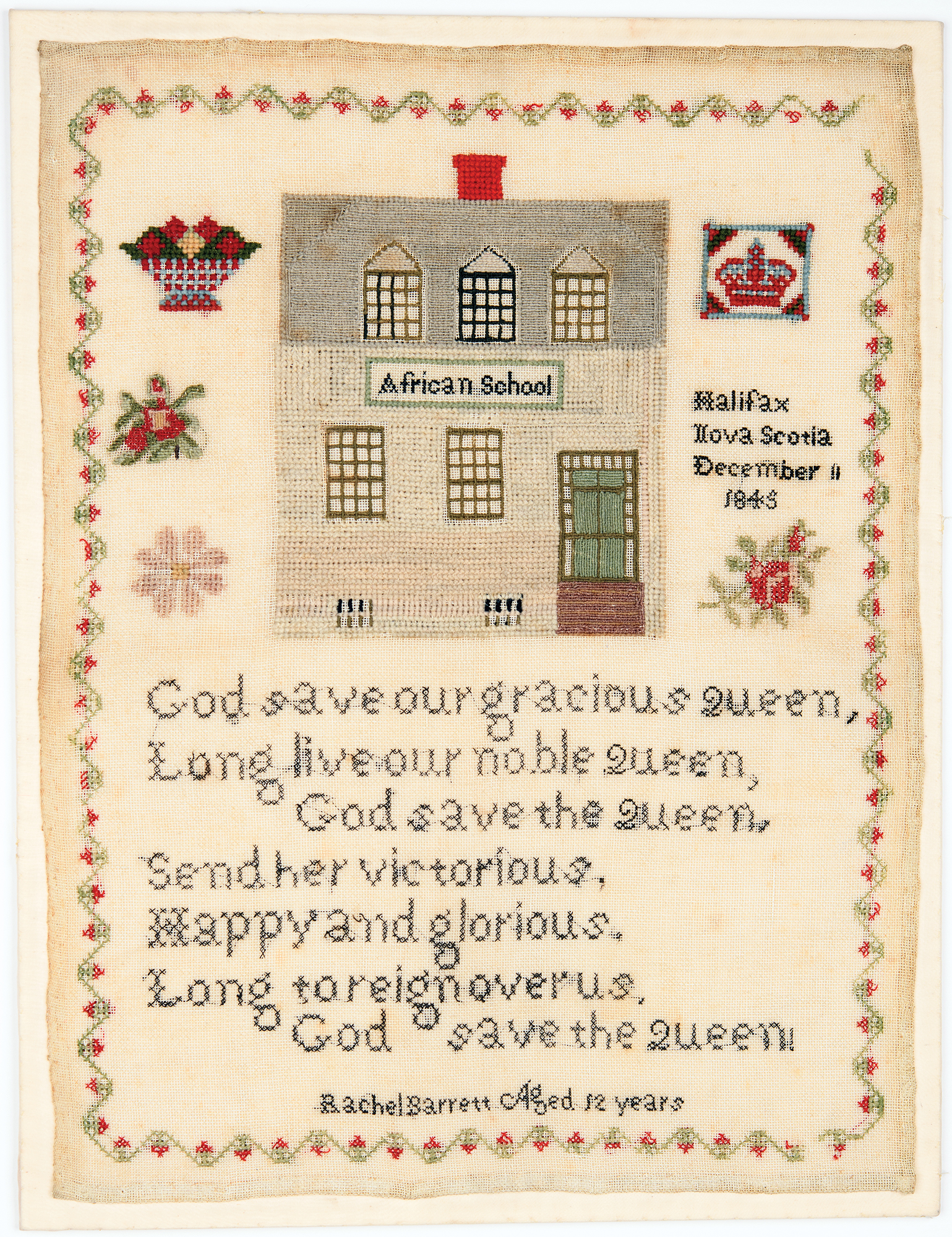
Featuring spectacular examples of needlework and other ornamental arts made by American girls in the eighteenth and nineteenth centuries, Locating Girlhood: Place and Identity in Early American “Schoolgirl” Art sheds new light on a rich but understudied genre, offering one of the most significant presentations on the subject in recent memory. This major loan exhibition brings together approximately 100 exceptional objects from over 35 museums and private collections nationwide, uniting celebrated masterpieces with remarkable lesser-known gems rarely seen by the public.
Unlike many earlier exhibitions, Locating Girlhood explores girlhood artworks from an explicitly art historical perspective, reframing these objects through the lens of place. Though the story of landscape art in the United States has traditionally centered on male academic painters, American girls and young women were laboring over a variety of landscape scenes long before the Hudson River School. From the eighteenth century onwards, representations of landscape were a common visual thread in samplers, needlework pictures, watercolors, and other artworks commonly united under the umbrella term “schoolgirl art,” extending from country scenes and cityscapes to maps and other cartographic compositions. By considering these works as deeply resonant expressions of place, the exhibition expands the story of the American landscape and situates women at its heart.
Timed to coincide with the US’s semiquincentennial, the Locating Girlhood both celebrates the creativity of early American girls and women and critically examines the colonial and early federal ideologies that structured their worldview.
Locating Girlhood is curated by Emelie Gevalt, PhD, AFAM’s Deborah Davenport and Stewart Stender Deputy Director & Chief Curatorial and Program Officer, and Caroline Culp, PhD, AFAM’s former Warren Family Assistant Curator and now Brock Curator of American Art at the Chrysler Museum of Art in Norfolk, VA.
Lead support for this exhibition is provided by Elizabeth and Irwin Warren; the Henry Luce Foundation; and the Historical Society of Early American Decoration (HSEAD). Major support is provided by Nina Beaty and the Coby Foundation. Generous support is provided by the Americana Foundation; Every Page Foundation; Deborah Buck Foundation; David and Dixie De Luca; Alexandra and Frederick Peters; Mary lngebrand-Pohlad Fund of The Minneapolis Foundation; the American Folk Art Society; and Jane and Gerald Katcher. Additional support is provided by Citi; the New York City Department of Cultural Affairs in partnership with the City Council; the New York State Council on the Arts with the support of the Office of the Governor and the New York State Legislature; and the David Davies and Jack Weeden Fund for Exhibitions. Support for the exhibition publication has generously been provided by Deborah Davenport and Stewart Stender and the Wyeth Foundation for American Art. Media support is provided by The Magazine ANTIQUES.
Attributed to Faith Trumbull (1743-1775), Needlework Picture, Boston and Lebanon, Connecticut, 1754, Silk, mica, and gouache on silk, 23 1/8 x 54 in., Connecticut Museum of Culture and History, Hartford, 1974.99.0
Mary King, Needlework Picture(Tree of Life), Philadelphia, 1754, Silk, metallic thread, and glass beads on silk, 18 x 24 1/2 in., Winterthur Museum, Garden & Library, Delaware, Bequest of Henry Francis du Pont, 1966.0978
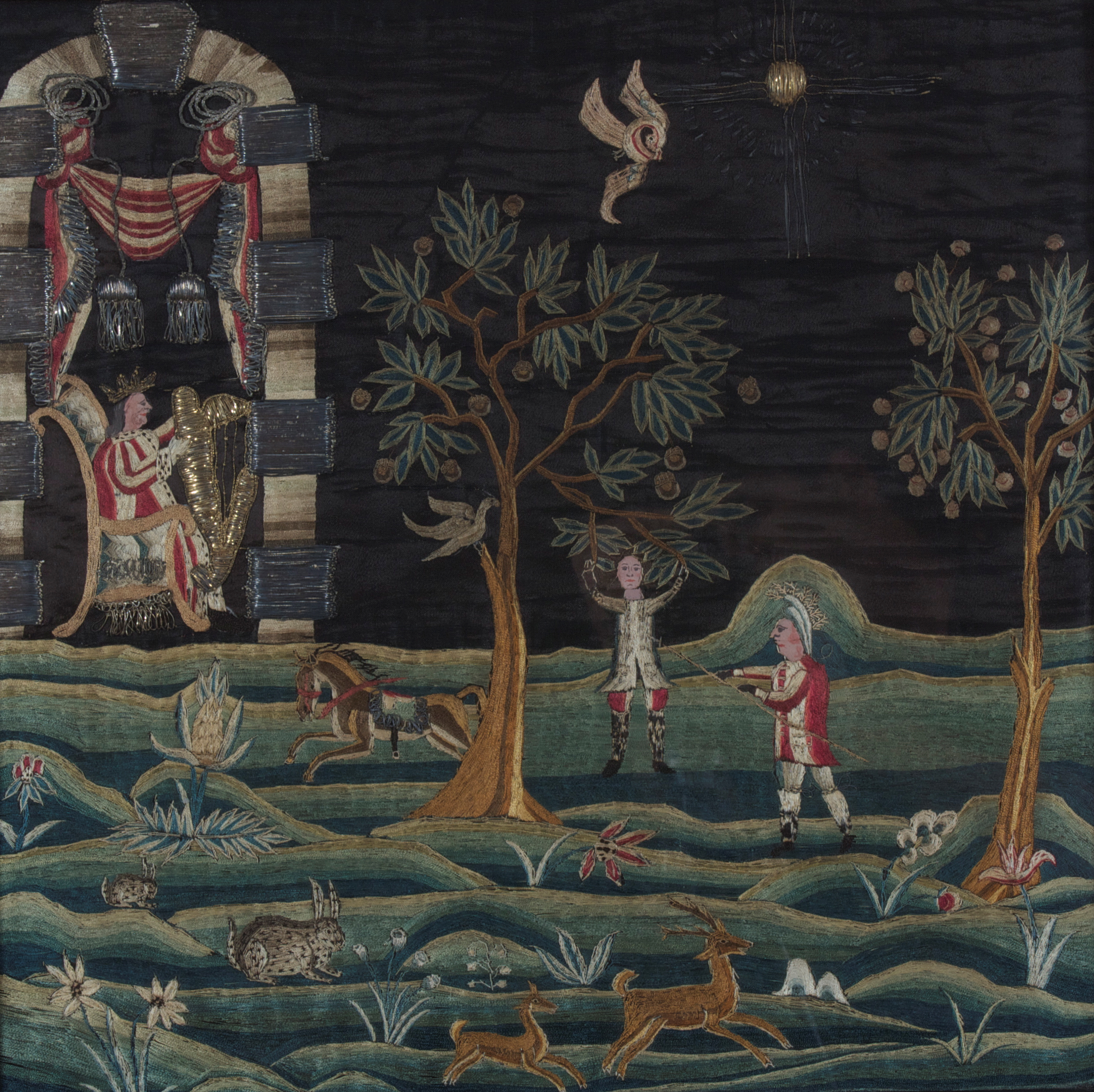
Faith Trumbull (1743-1775), Needlework Picture (The Hanging of Absalom), Probably Boston or Lebanon, Connecticut, 1754, Silk, metallic thread, and gouache on silk, 18 1/2 x 18 1/2 in., Lyman Allyn Art Museum, New London, Gift of Mrs. Edith Chappell, 1950.5
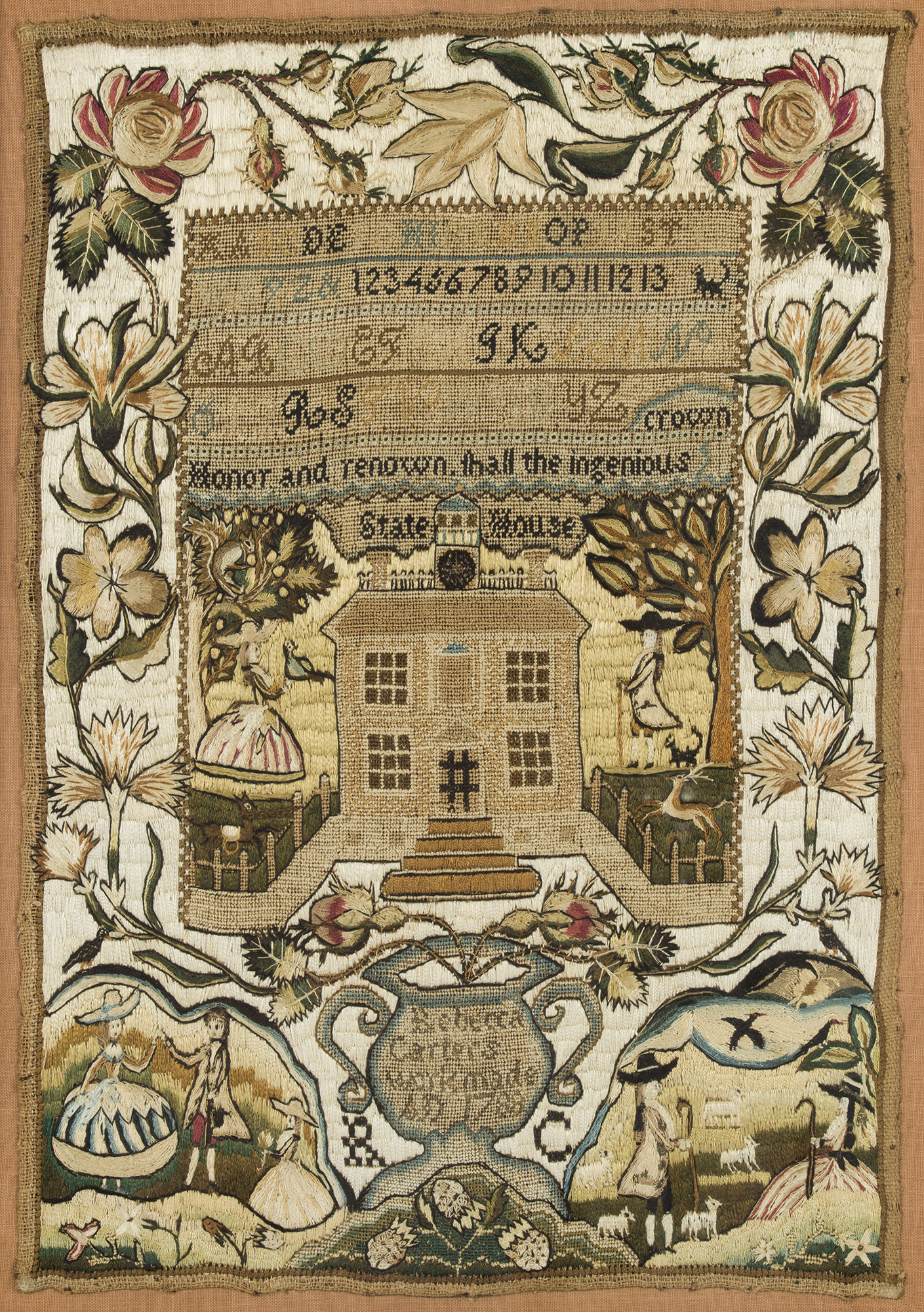
Rebecca Carter (1778-1837) with Ann Carter (1770-1798), Sampler, Providence, 1779-1788, Silk, metallic thread, and human hair on linen, 19 1/4 x 13 1/2 in., American Folk Art Museum, Gift of Ralph Esmerian, 2013.1.47
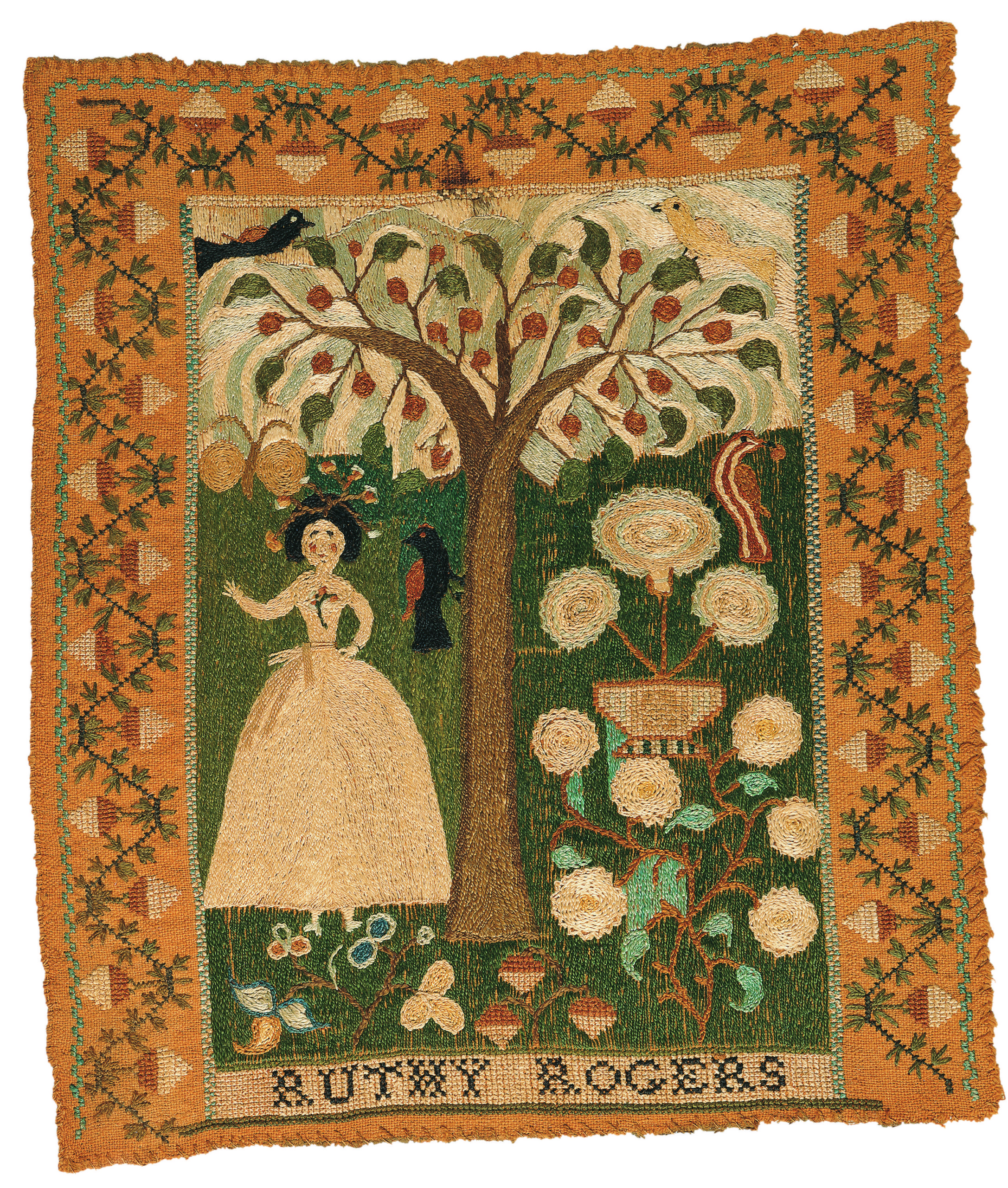
Ruthy Rogers (1778-1812), Needlework Picture, Marblehead, Massachusetts, 1789, Silk on linen, 10 1/2 x 9 in., American Folk Art Museum, gift of Ralph Esmerian, 2005.8.53
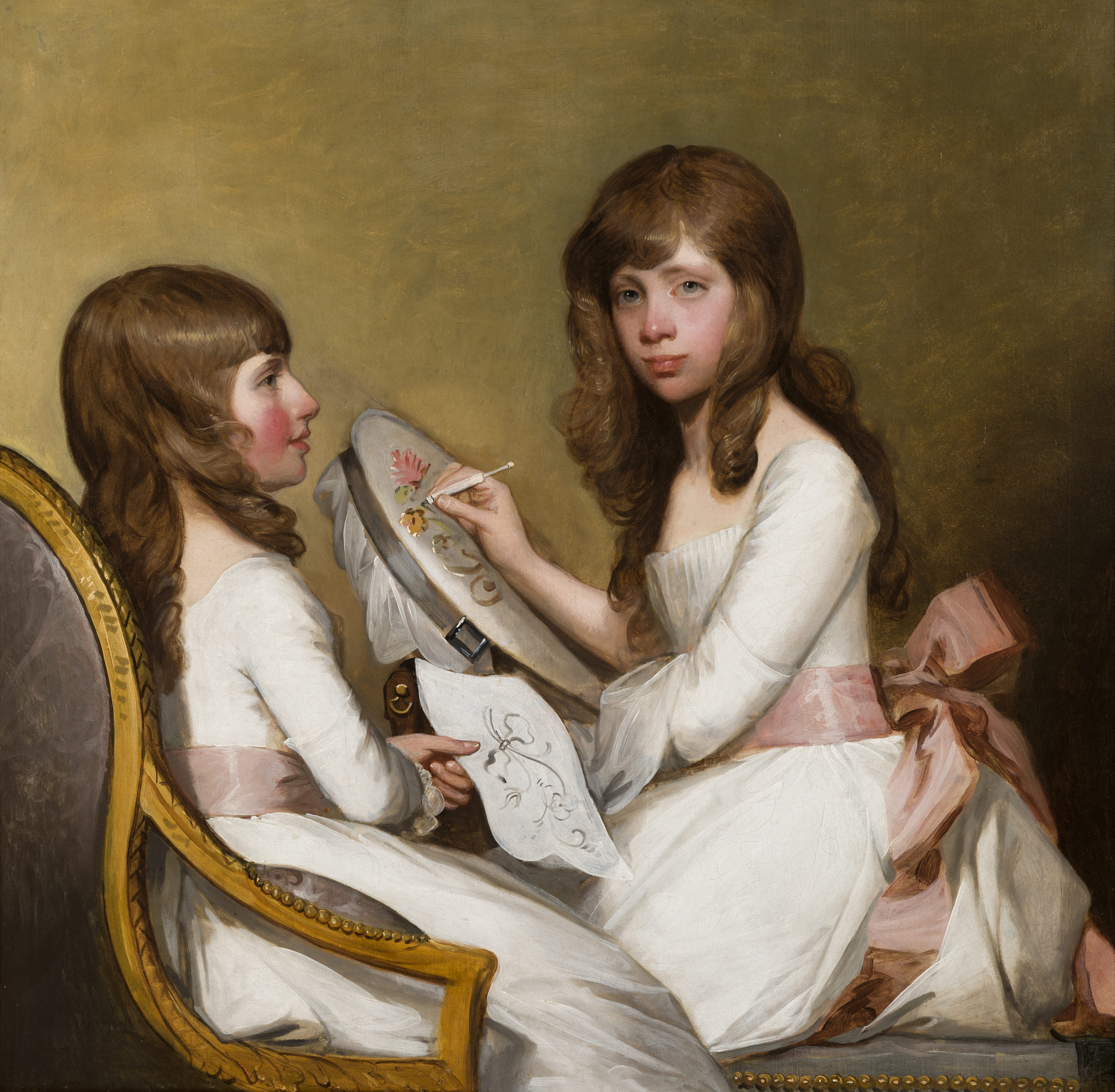
Gilbert Stuart (1755-1828), Anna Dorothea Foster and Charlotte Anna Dick, Dublin, Ireland, 1790-1791, Oil on canvas, 35 x 36 1/4 in., Reynolda House Museum of American Art, Winston-Salem, Gift of Charlotte Hanes in honor of Philip and Joan Hanes, 2019.2.1. Reynolda House is an affiliate of Wake Forest University.
Lead support for this exhibition is provided by Elizabeth and Irwin Warren; the Henry Luce Foundation; and the Historical Society of Early American Decoration (HSEAD). Major support is provided by Nina Beaty and the Coby Foundation. Generous support is provided by the Americana Foundation; Every Page Foundation; Deborah Buck Foundation; David and Dixie De Luca; Alexandra and Frederick Peters; Mary lngebrand-Pohlad Fund of The Minneapolis Foundation; the American Folk Art Society; and Jane and Gerald Katcher. Additional support is provided by Citi; the New York City Department of Cultural Affairs in partnership with the City Council; the New York State Council on the Arts with the support of the Office of the Governor and the New York State Legislature; and the David Davies and Jack Weeden Fund for Exhibitions. Support for the exhibition publication has generously been provided by Deborah Davenport and Stewart Stender and the Wyeth Foundation for American Art. Media support is provided by The Magazine ANTIQUES.